The Best Time to Snorkel in Antigua
Working out the best time to snorkel in Antigua is less about temperature than most travellers assume, since the sea barely cools off across the year; the real question is rainfall, swell and how those two move water clarity around the calendar. This guide walks through the dry and wet seasons month by month, when hurricane season actually changes your plans, and which of the reef snorkelling trips in Antigua run reliably no matter the month.
Quick answer
The sea stays warm enough to snorkel without a wetsuit all year in Antigua, so the real decision is clarity rather than temperature, and February through April, the driest and calmest stretch, is when reefs typically read clearest. June through November is the Atlantic hurricane season, which raises the odds of a cancelled morning rather than ruining a whole trip.
Key takeaways
- February and March are the driest months at about 45 mm of rain each, per the Antigua/Barbuda Meteorological Services station normals for V. C. Bird International Airport.
- October is the wettest month at about 142 mm, with November and September close behind.
- The Atlantic hurricane season runs 1 June to 30 November, with NOAA climatology placing the peak from roughly mid-August through mid-October and the statistical single-day peak around 10 September.
- Most listings, including the clear-kayak mangrove and reef snorkel at $94, offer free cancellation up to 24 hours before, shown on the listing before you pay.
- Sargassum arrivals are episodic rather than seasonal; when it lands it collects mainly on windward, Atlantic-facing shores rather than the sheltered bays the snorkelling boats use.
- For the spot each month suits, see which reefs you can reach from the beach.
The Short Answer: You're Choosing Clarity, Not Temperature
Antigua's sea temperature barely moves through the year, generally sitting somewhere in the wide Caribbean range of about 26 °C to 29 °C (79 °F to 84 °F), warm enough that nobody snorkels here in a wetsuit whatever month they land. That flat line means the calendar question that actually matters is water clarity: how much rain has recently run off the land, how much swell and wind have stirred the shallows, and whether a storm passed through in the last few days. None of those are things a visibility number could capture even if we had one to print, which is why the honest advice is to watch the drivers rather than chase a distance figure nobody has actually measured for this island.
That framing also explains why the dry season gets recommended so consistently across travel guides: it is not that the reef changes, it is that less rain and lighter seas give the water fewer reasons to cloud up. The wet season does not close the door on snorkelling; it just adds more days where a trip might get postponed for sea state, and a little more runoff after a heavy shower.
Antigua Snorkelling Month by Month
Figures below come from the Antigua/Barbuda Meteorological Services station normals for V. C. Bird International Airport. Daytime highs vary by only about 3 °C across the whole year, so read the Verdict column with rainfall and storm risk in mind rather than temperature.
Month by month
| Month | Mean daily high | Average rainfall | Sea and crowd notes | Verdict for snorkelling |
|---|---|---|---|---|
| January | 28.3 °C (83 °F) | 57 mm (2.2 in) | Calm seas, peak winter crowds | Very good |
| February | 28.4 °C (83 °F) | 45 mm (1.8 in) | Driest month, busy with winter visitors | Best overall |
| March | 28.8 °C (84 °F) | 46 mm (1.8 in) | Still dry, spring-break crowds late in the month | Best overall |
| April | 29.4 °C (85 °F) | 72 mm (2.8 in) | Warming, crowds thinning after Easter | Very good |
| May | 30.2 °C (86 °F) | 90 mm (3.5 in) | Shoulder month, quieter beaches | Good, watch showers |
| June | 30.6 °C (87 °F) | 62 mm (2.4 in) | Hurricane season opens, still mostly calm | Good |
| July | 30.9 °C (88 °F) | 87 mm (3.4 in) | Warmest stretch begins, occasional squalls | Good |
| August | 31.2 °C (88 °F) | 99 mm (3.9 in) | Hottest month, storm watch season underway | Fair, check forecasts |
| September | 31.1 °C (88 °F) | 132 mm (5.2 in) | Statistical hurricane peak around 10 September | Fair, book flexible dates |
| October | 30.6 °C (87 °F) | 142 mm (5.6 in) | Wettest month, quiet beaches | Fair, book flexible dates |
| November | 29.8 °C (86 °F) | 135 mm (5.3 in) | Hurricane season closes on the 30th | Good by late month |
| December | 28.8 °C (84 °F) | 83 mm (3.3 in) | Seas settling, holiday crowds building | Very good |
The annual average across all twelve months is 29.8 °C (86 °F) with total rainfall of about 1,049 mm (41.3 in) a year, and the record high on file for Antigua and Barbuda is 34.9 °C (94.8 °F), set on 12 August 1995. None of that heat translates to rough water on its own; it is the rain and the storm tracks layered on top of it that decide whether a given week is a good one to book.
Dry Season, December to April: Why the Reefs Read Clearest
December through April is the stretch travel guides call Antigua's dry season, and February and March are the driest of all at about 45 mm of rain each. Less rain means less runoff draining into the bays, and the trade winds that dominate this window tend to be steadier and gentler than the gustier patterns that show up later in the year. Put together, those two conditions are exactly what keeps water calmer and clearer for longer stretches, which is why this window gets recommended so consistently, not because the reef itself is any different in December than in August.
The trade-off is crowding. Winter is peak season for Caribbean travel generally, so hotel prices and tour demand both climb, and popular shore spots like Galleon Beach see more boats and more snorkellers in the water at once during the busiest weeks. If you can travel in late April, you get most of the dry season's calm water with a noticeably thinner crowd.
Wet Season and Hurricane Season, June to November: What Actually Changes
The Atlantic hurricane season officially runs 1 June to 30 November, and NOAA's climatology places the real peak of activity from roughly mid-August through mid-October, with the statistical single-day peak sitting around 10 September. A named storm does not automatically mean a direct hit on Antigua; most of what actually disrupts a snorkelling trip in these months is the swell and wind that arrive days before or after a system passes well offshore, rather than a storm making landfall.
Rainfall climbs through this stretch too, from 62 mm in June up to 142 mm in October, the wettest month on the island's record. That does not mean every day is a washout; Caribbean rain in this season tends to arrive as short, heavy showers rather than settled grey days, and a boat trip can often outrun a shower simply by moving to a different stretch of coast. What it does mean is that travel insurance and a free-cancellation booking matter more here than they do in February, since operators make the call on sea state the morning of the trip and a cancelled slot is a real possibility during peak season.
Shoulder Months, May and November
May sits just before hurricane season opens and still carries a fair amount of the dry season's calm water, with rainfall at 90 mm, higher than March but well short of the autumn peak. It is a reasonable pick for a traveller who wants lighter crowds and does not mind an occasional shower. November closes out hurricane season on the 30th and, by the back half of the month, the seas typically start settling again even though the average rainfall for the month as a whole, 135 mm, is still among the higher figures on the table.
Both months reward flexible dates over a fixed itinerary.
Sargassum: An Episodic Problem, Not a Season
Sargassum, the floating brown seaweed that periodically washes up on Caribbean shores, arrives in a genuinely episodic pattern that varies year to year rather than on a fixed calendar; we do not have a verified month-by-month bulletin for Antigua specifically, so this page will not invent one. When it does arrive, it tends to collect mainly on windward, Atlantic-facing shores, while the sheltered Caribbean-side bays where most of the island's snorkelling boats run are generally less exposed to it.
The practical move needs no forecast: check recent beach photos or ask your operator the week before you travel, and remember that a boat trip out to an offshore reef, such as Cades Reef or Green Island, sidesteps a weeded beach entirely, since you are getting in the water well past any seaweed line that might be sitting on the sand.
What Actually Cancels a Snorkelling Trip
Operators cancel for sea state, not for a forecast alone, and that call is usually made the morning of the trip rather than days in advance. Wind and swell, not a light shower, are the practical trigger; a squall that passes through overnight rarely stops a boat that is scheduled to leave once conditions settle. Most of these listings offer free cancellation up to 24 hours before, which is shown on the listing before you pay, so booking does not lock you into a bad-weather morning.
Last verified: August 2026.
Time of Day: Why Mornings Are the Calm Slot
Trade winds on Antigua tend to build through the day, so the water is at its calmest and glassiest in the first few hours after sunrise, before the afternoon breeze picks up and starts putting a light chop on the surface. That is also before the day's heat has built, which makes the boat ride itself more comfortable. It is one reason most snorkelling boats depart in the morning rather than after lunch: the Turtle Beach power snorkel and similar trips are timed around this window deliberately, not just for logistics.
Which Season Suits Which Kind of Trip
Rainfall and sea state move together on Antigua, so the season you pick changes the shape of the day rather than whether you get in the water at all. This is how the year splits in practice.
Season by season, and what it changes
| Season | Months | What the reef is usually like | What to book | Watch for |
|---|---|---|---|---|
| Dry season | December to April | Least rain reaching the water and lighter seas, so the reef generally reads clearest | Any of the boat reefs, including the Cades Reef lobster lunch cruise at $160 | Busiest weeks and the highest room rates |
| Early wet season | May to July | Warmer air, short showers that pass, sea still settled most days | Shorter half-days such as the clear-kayak mangrove and reef snorkel at $94 | Afternoon squalls; book the morning slot |
| Peak hurricane months | August to October | Wettest stretch of the year and the most swell days | Anything with free cancellation, and travel insurance | Sea state, not the storm itself, is what cancels trips |
| Late wet season | November | Still wet on the gauge but the season winds down | Shore snorkels and short boat runs | Rain totals stay high into November |
None of this rules a month out. It changes how much slack you leave in the plan and how much it matters that the booking can be moved. Last verified: August 2026
Which Month Suits Which Traveller
If You want the calmest, clearest conditions and don't mind crowds
February or March, the driest months on record, with the trade-off of peak winter pricing and busier shore spots.
If You want dry-season conditions with fewer other travellers
Late April, after the spring-break crowd thins but before hurricane season opens in June.
If You are booking on a tight budget
September or October, when hotel and flight prices typically drop, provided you book trips with free cancellation and stay flexible on dates.
If You have fixed, locked-in travel dates whatever the season
Book the first slot of your trip rather than the last, so a weather cancellation still leaves you room to reschedule.
If You want to avoid any hurricane-season risk entirely
December through May, outside the official 1 June to 30 November window.
Trips That Run Reliably Year-Round
These trips operate through both the dry and wet seasons, with free cancellation on the listing if the sea state calls for it on the day.
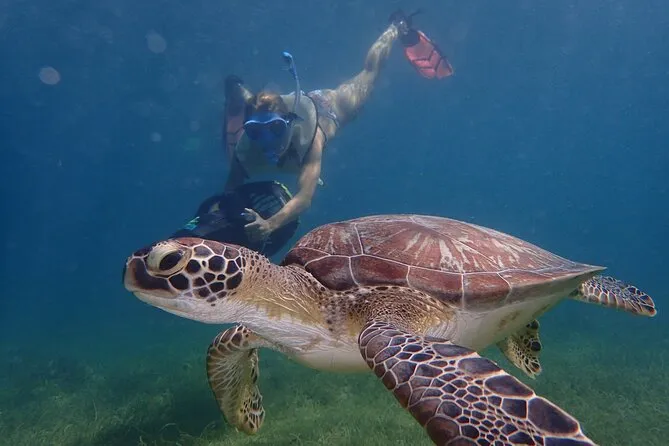 from $132Most Booked — 657 Reviews, 4.9★
 Turtle Beach Power Snorkeling Adventure
Glide through Freeman's Bay on a motorized sea scooter that does the swimming for you. After a quick tutorial, you follow your guide over colorful coral, a shipwreck…
- Motorized sea scooter propels you through the water
- Guided to the best spots for turtles, rays, and fish
- Guaranteed shipwreck and the Pillars of Hercules
- Free souvenir photos plus hotel pickup and drop-off
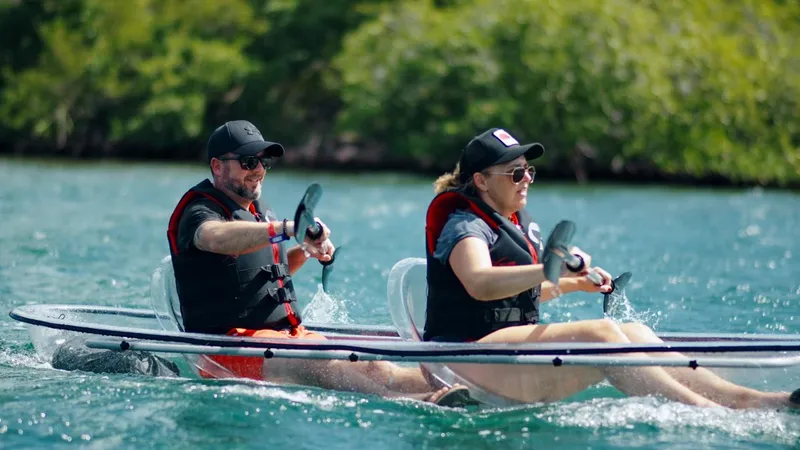 from $94Glass Kayak + Reef
 Antigua Clear Kayak Mangrove & Reef Snorkel
Paddle a fully transparent glass kayak through a calm mangrove estuary in Seatons, watching the seabed slide by beneath you, then take a short skiff transfer to a…
- Fully transparent glass kayaks with back-rest seats
- Paddle a calm mangrove estuary among offshore islands
- Skiff transfer to a pristine coral reef for snorkeling
- Snorkel gear, snacks, and bottled water included
 from $160Lobster Lunch — 484 Reviews, 4.8★
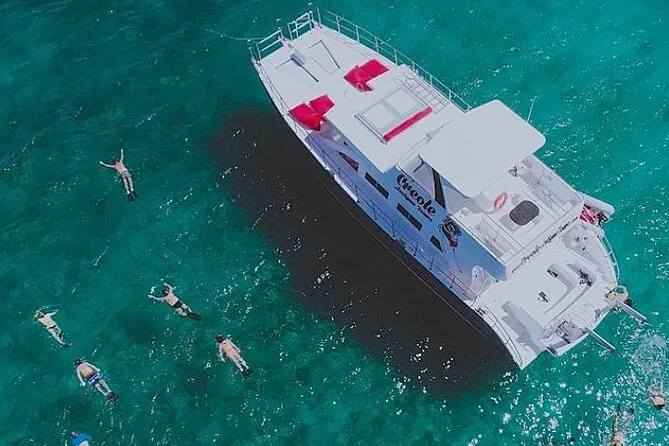
 Creole Antigua Snorkel & Lobster Lunch Cruise to Cades Reef
Cruise from Jolly Harbour to secluded Maiden Island and Cades Reef for guided snorkeling over coral, wrecks, and the occasional turtle or ray. Come ashore for a beachside…
- Boat cruise to Maiden Island and Cades Reef
- Guided snorkeling over reef, wrecks, and marine life
- Beachside grilled lobster lunch (seasonal)
- Rum punch and drinks from the onboard bar
 from $95Turtle Safari — 39 Reviews, 4.9★
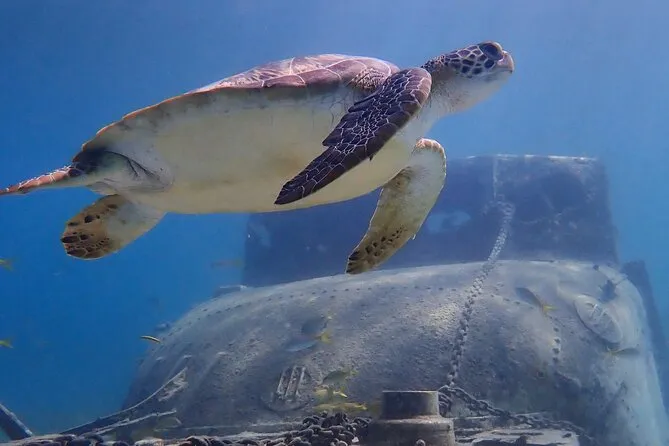
 Swim With Turtles — Galleon Beach Snorkel Safari
A short, easy shore snorkel at Galleon Beach, one of Antigua's best spots for wild green turtles. Your guide leads you straight from the sand to the reef…
- Easy shore snorkel — no boat required
- Reliable wild green turtle sightings at Galleon Beach
- Look for rays, conch, and tropical fish
- Small group (max 14) with hotel transport included
How to Pick Your Dates
How to pick your dates
- Book the first morning of your stay for any snorkelling trip, not the last, so a cancellation still leaves you room to reschedule
- Choose a listing that shows free cancellation up to 24 hours before, especially for trips booked in September or October
- If you're travelling June through November, buy travel insurance that covers weather disruption to your trip, not just the tour cost itself
- Check recent beach photos or ask the operator about sargassum the week before you travel if you're set on a specific shore spot
- Aim for a morning departure regardless of season; the water is calmest before the afternoon breeze builds
Our Pick for Most Travellers
If the dates are open, aim at February or March and book a morning departure. If they are not, the month matters less than picking a trip you can move, and the reefs themselves are there all year. For where each of those reefs actually sits, see where to snorkel in Antigua, and for the money side, what a snorkelling day costs.
Frequently Asked Questions
What month has the clearest water for snorkelling in Antigua?
February and March are the driest months, at about 45 mm of rain each, and drier conditions with lighter seas are generally when the water reads clearest.
Can you snorkel in Antigua during hurricane season?
Yes. The season runs 1 June to 30 November, but a named storm rarely makes a direct hit; most trips run as normal, with occasional cancellations for swell and wind around the mid-August to mid-October peak.
How warm is the sea in Antigua in winter?
Warm enough to snorkel without a wetsuit; the sea stays in the general Caribbean range of about 26 °C to 29 °C (79 °F to 84 °F) year-round, with only minor seasonal movement.
When is sargassum a problem in Antigua?
Arrivals are episodic and vary year to year rather than following a fixed season, and when it does show up it mostly collects on windward, Atlantic-facing shores rather than the sheltered bays most boats use.
Why do snorkelling boats leave in the morning?
Trade winds build through the day, so mornings are calmer and clearer before the afternoon breeze puts a chop on the water.
Which month is the wettest in Antigua?
October, at about 142 mm of average rainfall, with November and September close behind.
What happens if a snorkelling trip is cancelled for weather?
Most listings offer free cancellation up to 24 hours before, shown on the listing before you pay, so a weather call the morning of the trip does not cost you the booking.